AI in Asset Management – from hype to reality
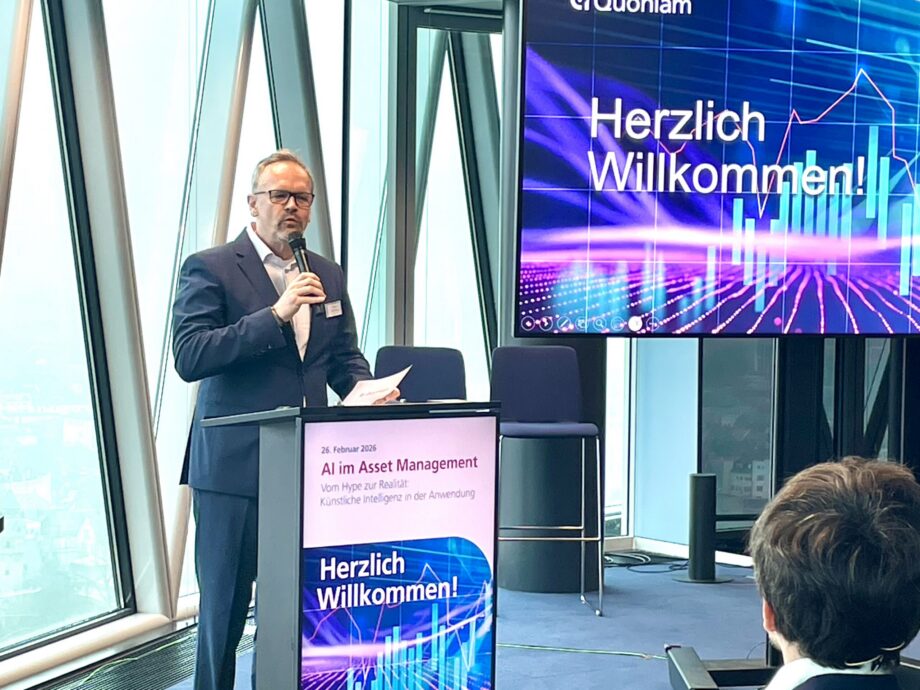
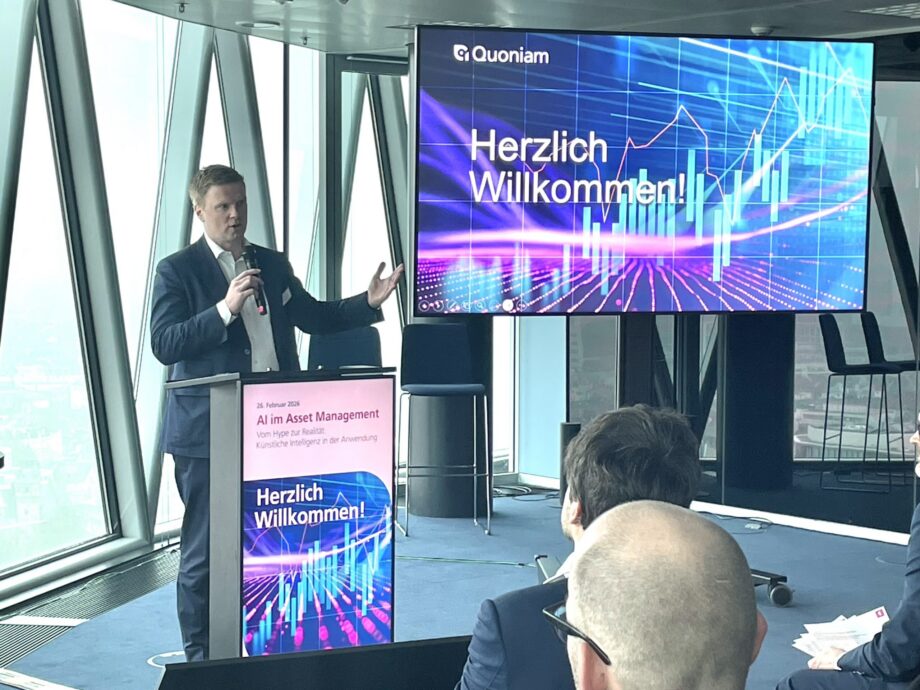
How is artificial intelligence transforming asset management – strategically, technologically, and within the investment process itself? This question was at the heart of our recent event in Frankfurt. Together with experts from consulting, technology, academia and investment practice, we explored the topic from multiple perspectives.
Key takeaways
-
AI is not a cost tool – it is a competitive factor: The key lies in how it is integrated into data, processes and investment logic.
-
Infrastructure and implementation are critical: Value comes from architecture, data quality and governance – not technology alone.
-
AI enhances the investment process – but does not replace humans: Efficiency gains are real, but responsibility and judgement remain essential.
What are the main learnings?
1. Strategic perspective: AI as a structural competitive factor
One of the central learnings of the day was that AI is more than just a tool for cost reduction. It is a structural competitive factor.
The pace of technological development is unprecedented. Models are becoming more powerful, agent systems more complex, and use cases more concrete. At the same time, it is becoming clear that competitive advantage is not determined by access to AI, but by a firm’s ability to integrate it systematically into data architecture, research processes and governance frameworks.
The crucial question is not whether AI is used – but how consistently capabilities are built. In the context of asset management: those who invest today in data quality, infrastructure and methodological discipline are laying the foundation for sustainable competitiveness.
Differentiation remains possible. AI does not necessarily lead to a homogenisation of the industry – rather, it can even reinforce specialisation, for example through more individualised research approaches or tailored model architectures.
“The challenge is not access to AI, but integrating it systematically into data, processes and models – only then it can create a sustainable competitive advantage.”

Dr Volker Flögel, CFA, CIO, Quoniam
2. Technological perspective: infrastructure is key
Another focus was on the technological dimension. Modern AI applications rely on powerful computing infrastructure, suitable software solutions and the question of the right implementation strategy.
Key considerations include:
- Computing infrastructure: public cloud solutions vs. on-premise infrastructure – i.e. running AI systems in a firm’s own data centres.
- Software stacks: the combination of AI models, data processing and applications that together enable an AI solution.
- Software strategy: use of commercial models vs. open-source approaches, i.e. freely available AI models that firms can operate themselves and adapt to their requirements.
“What matters is not the individual model, but how data, infrastructure and processes work together. Only through this integration does AI deliver value in the investment process.”

Thomas Kieselstein, CFA, Senior Partner & Co-Founder, Quoniam
For European asset managers in particular, regulatory requirements, data protection and auditability play a central role. AI is therefore not an isolated IT project, but part of an asset manager’s strategic architecture.
Costs increase with greater usage. Agent-based systems significantly raise computing demand. The efficiency of the underlying infrastructure thus becomes a competitive factor.
3. Investment and implementation perspective: AI as an enabler of systematic investment processes
The use of AI becomes most tangible within the investment process. Alongside established applications such as text analysis or forecasting models, a new approach is increasingly coming into focus: agentic AI systems.
These refer to AI-based software programmes (‘agents’) that can autonomously perform tasks, interact with each other and prepare decisions within a defined framework. Multiple specialised agents can work together – for example in data collection, the analysis of new information or the preparation of research findings.
For systematic asset managers, this opens up new opportunities across the entire research and investment chain. Today, AI can already help to:
- accelerate and structure research processes,
- systematically analyse large volumes of unstructured data – such as news or company reports,
- identify new signals for investment models, and
- develop forecasting models more efficiently.
This leads to significant productivity gains, particularly in data-intensive workflows. Analysts and portfolio managers can focus more on interpreting results and refining investment strategies.
At the same time, it has become clear that the responsible integration of AI remains crucial. Agentic systems require clear guidelines, transparent models and consistent human oversight. Model risks, overfitting of signals or misinterpretations cannot be fully automated.
Even in the age of AI, therefore, one central principle remains: investment decisions must be transparent – both to investors and to regulators.
“The greatest value of AI today lies in more efficient workflows and better signals. In forecasting, we see improvements – but they are evolutionary rather than revolutionary.”
Dr Volker Flögel, CFA, CIO, Quoniam
Conclusion: humans and machines – a new division of roles
The event showed that AI is changing the way we work, enhancing analytical capabilities and accelerating processes. However, sustainable outperformance is not achieved through technology alone.
The future is not “humans or machines”, but humans and machines – in a new division of roles. AI is becoming an amplifier of systematic expertise. However, responsibility, methodological discipline and investment judgement remain essential elements of successful asset management.
We would like to thank all speakers and participants for the engaging discussion and look forward to continuing the dialogue on the responsible integration of AI into the investment process.