Market commentary bonds: Resilience despite challenging markets
During the third quarter of 2026, the energy shock intensified inflation and growth risks, while government bond yields rose markedly across the US and Europe. Despite the increasingly stagflationary backdrop, investment-grade credit spreads remained broadly stable, even as differentiation between sectors and issuers increased.

Dr. Harald Henke
Principal Investment Strategist Fixed Income
Key takeaways
-
Energy scarcity raises risks: Inflation pressure is rising as supply constraints increasingly weigh on growth.
-
Credit markets stay resilient: Headline spreads remain stable, but sector dispersion is increasing.
-
Higher yields expose weak spots: Real estate and hyperscaler bonds show greater dispersion.
Energy scarcity: From a price problem to a production problem
The energy shock that dominated the first half of the year has increasingly developed into a question of physical availability. This is particularly visible in the market for diesel. While crude oil prices provide an important indication of the overall energy-price environment, they reveal relatively little about bottlenecks in individual refined products. Diesel has become a particularly scarce part of the barrel during the third quarter.
Figure 1: Diesel and freight rate costs
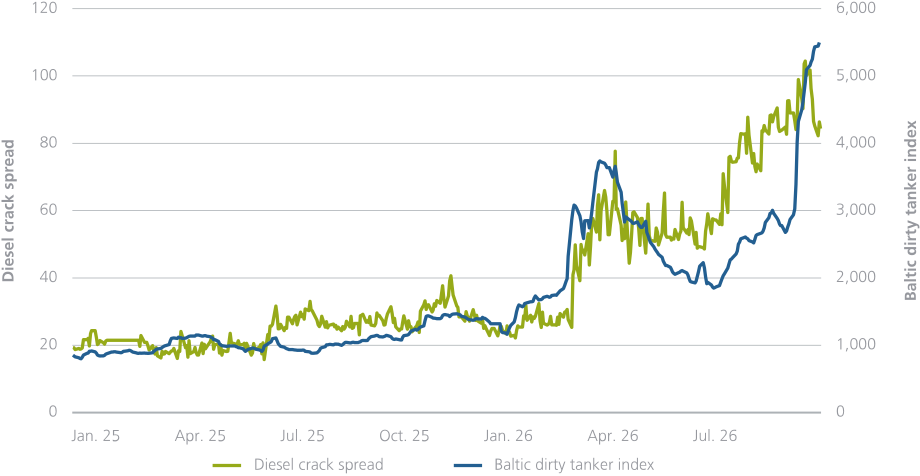
As Figure 1 shows, the diesel crack spread has risen sharply since the beginning of the year and accelerated further during the third quarter. The spread measures the value of diesel relative to the crude oil required to produce it and therefore provides an indication of the scarcity of refining capacity and available diesel supply. Its elevated level suggests that the pressure in energy markets is increasingly concentrated in refined products rather than being explained by crude oil prices alone.
Pressure is also visible in energy transport markets. The Baltic Dirty Tanker Index, which measures freight rates for crude oil and other so-called dirty petroleum cargoes, rose to an all-time high in September. Higher tanker rates indicate that the cost of redistributing energy between regions has increased sharply, adding a logistical component to the existing supply constraints. Together with the rise in diesel refining margins, this suggests that the energy shock is increasingly being shaped not only by the availability of crude oil, but also by bottlenecks in refining and transportation.
As discussed in our recent article on commodity scarcity, the economic effects of an energy shock can change once inventories and other buffers are depleted. Higher prices initially help to balance supply and demand. If essential inputs become physically unavailable, however, adjustment increasingly also takes place through quantities. Restrictions on diesel supply can affect transportation, industrial production and agriculture and may therefore translate directly into lower economic activity.
The resulting combination is particularly challenging from a macroeconomic perspective. Higher fuel and transportation costs continue to add to inflationary pressure, while shortages can simultaneously constrain production. The energy shock can therefore weigh on growth even before the effect of higher interest rates on demand becomes fully visible. This supply-side channel is an important part of the stagflationary risks that have become more prominent during the third quarter.
Interest rates: inflation concerns meet growth concerns
Government bond markets also reflected the increasingly difficult inflation backdrop during the third quarter. Yields moved higher across large parts of the US and German curves, as continued price pressure reduced the scope for a rapid easing of monetary policy. The adjustment was not confined to the very long end of the market but was clearly visible in both two- and ten-year maturities.
Figure 2: US and German government bond yields
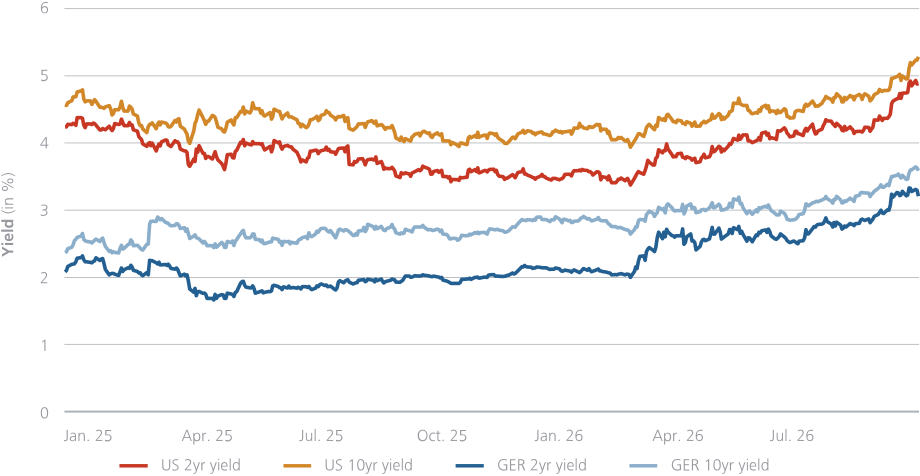
As Figure 2 shows, both two- and ten-year yields in the US and Germany increased markedly between the end of June and the end of September. The repricing was substantial across maturities, with ten-year yields rising slightly more than two-year yields over the quarter. The movement therefore extended well beyond expectations for the near-term path of monetary policy. Higher inflation uncertainty and the prospect of restrictive monetary conditions persisting for longer have also affected longer-term financing costs.
Greater differentiation has also become visible within the euro-area government bond market. The spread between French and German ten-year government bonds widened sharply during September and ended the quarter at around 127 basis points, its widest level since 2012. The move represents a notable increase in the risk premium on French government bonds and shows that the rise in European yields has increasingly been accompanied by country-specific repricing rather than reflecting common interest-rate developments alone.
The movement further out along the yield curve adds another dimension. In both the US and the UK, the difference between 30-year and 10-year government bond yields narrowed considerably during the quarter.
Figure 3: US and UK 30-year minus 10-year government bond yield spread
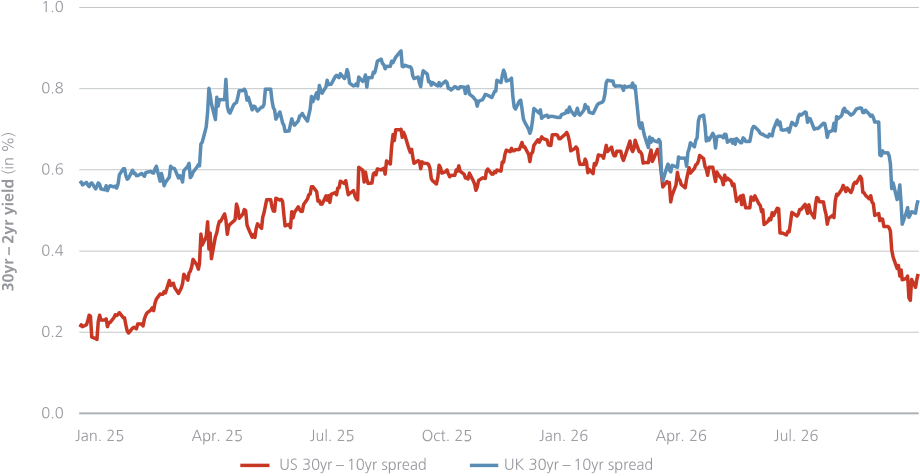
Figure 3 should not be interpreted as a rally in very long-dated bonds. Thirty-year yields also increased during the quarter, but less strongly than ten-year yields. The resulting bear flattening of the 10-to-30-year segment is consistent with a market environment in which inflation and restrictive monetary policy remain important concerns in the medium term, while investors are also considering the longer-term consequences for economic growth. The curve movement alone does not provide evidence of an imminent downturn, but it illustrates the increasingly uncomfortable combination of inflation and growth risks.
Government bond market operations also indicate greater attention to conditions at the long end. In the US, the Treasury doubled the maximum size of liquidity-support buybacks in the 10-to-30-year sector to at least USD 4 billion per operation from September.
In the UK, the Bank of England set out a slower and more predictable path for the remaining unwind of its gilt portfolio, including annual sales of GBP 20 billion and the retention of GBP 120 billion of the longest-dated gilts. These measures underline the attention being paid to the functioning and absorption capacity of long-dated government bond markets.
Real estate: Higher rates start to hurt
The rise in government bond yields has also fed through to household and corporate financing conditions. In the US, mortgage rates remained elevated throughout the third quarter and moved higher again alongside Treasury yields. With house prices still high, financing costs continue to weigh on affordability and limit the scope for a broader recovery in housing activity.
Figure 4: US mortgage rate and 10-year Treasury yield
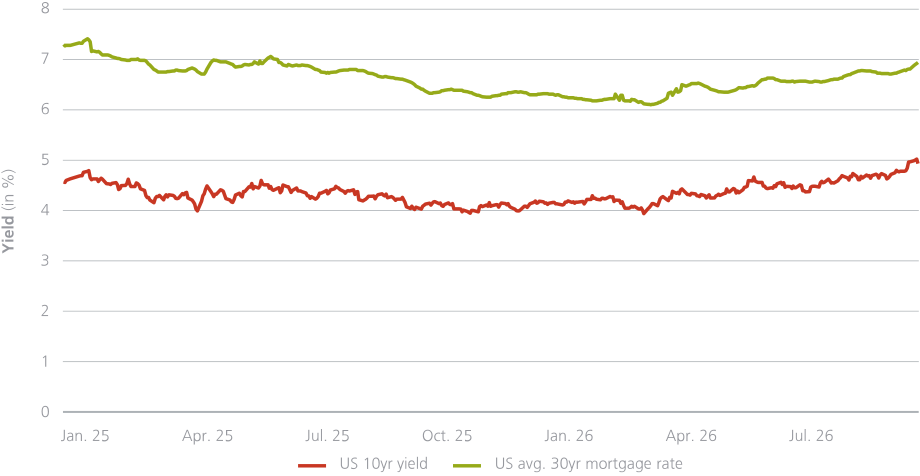
As Figure 4 shows, the average rate on 30-year US mortgages has moved broadly in line with the 10-year Treasury yield and increased again since the end of June. Persistently high mortgage rates raise the cost of purchasing a home and reduce the incentive for existing borrowers to move or refinance. The housing market therefore provides one of the most direct channels through which higher government bond yields can eventually weigh on economic activity.
Higher financing costs are also becoming visible in parts of the corporate bond market. The effect has been particularly pronounced in European real estate. Since the end of June, spreads on Euro investment-grade REIT bonds have widened from 94 to 109 basis points, while the broader Euro Corporate index has moved only from 80 to 87 basis points. The corresponding development in the US has been much less pronounced: REIT spreads widened from 68 to 74 basis points, in line with the six-basis-point increase in the overall US Corporate index.
The development in European real estate does not point to broad-based credit stress. It does, however, illustrate how the impact of higher interest rates can differ substantially across sectors. Real estate companies are particularly exposed to refinancing costs and changes in property valuations, while many other investment-grade issuers remain less directly affected. The widening in REIT spreads therefore provides an early indication of the increasing dispersion beneath otherwise stable headline credit spreads.
Credit spreads: Calm at the index level
Despite the more challenging macroeconomic backdrop, investment-grade credit markets remained relatively resilient during the third quarter. Higher government bond yields, persistent inflation pressure and growing concerns about the impact of restrictive financing conditions led to some widening in corporate bond spreads, but the adjustment remained moderate in both the US and Europe.
Figure 5: Investment-grade credit spreads in the US and Europe
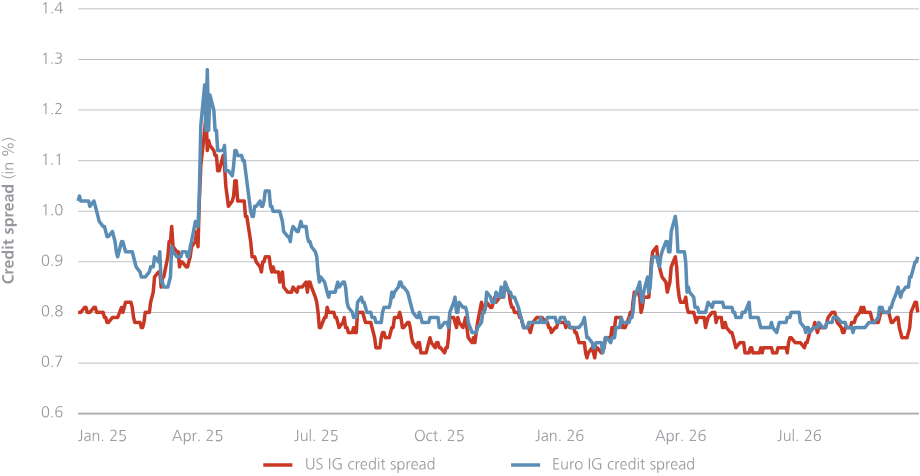
As Figure 5 shows, investment-grade spreads widened during the third quarter, particularly in Europe, but remained well below the levels reached during earlier periods of stress this year. The sharp rise in government bond yields was therefore not accompanied by a comparable repricing of corporate credit risk. Overall spread levels continue to suggest that investors remain relatively confident in the ability of investment-grade issuers to absorb the current macroeconomic pressures.
Several factors may have contributed to this resilience. Balance sheets remain solid across large parts of the investment-grade universe, while higher all-in yields continue to provide attractive income for investors. At the same time, refinancing needs are unevenly distributed, and many issuers are not immediately exposed to current market rates. The increase in sovereign yields has therefore not translated mechanically into wider corporate spreads.
The relatively contained movement in headline indices nevertheless masks increasingly pronounced differences within the market. The widening in European real-estate spreads discussed above is one example. A second, and very different, case can be found among large technology companies, where substantial investment requirements and rising bond issuance have begun to influence relative credit performance.
AI and hyperscalers – the investment boom reaches credit markets
A second source of dispersion has emerged among the large US technology companies at the centre of the current investment boom in artificial intelligence. These issuers continue to benefit from strong business models and high credit quality, but the scale of their investment programmes has increased substantially. As capital expenditure on data centres, computing capacity and related infrastructure has risen, bond markets have become an increasingly important source of financing.
Figure 6: Hyperscaler credit spreads versus US investment-grade credit
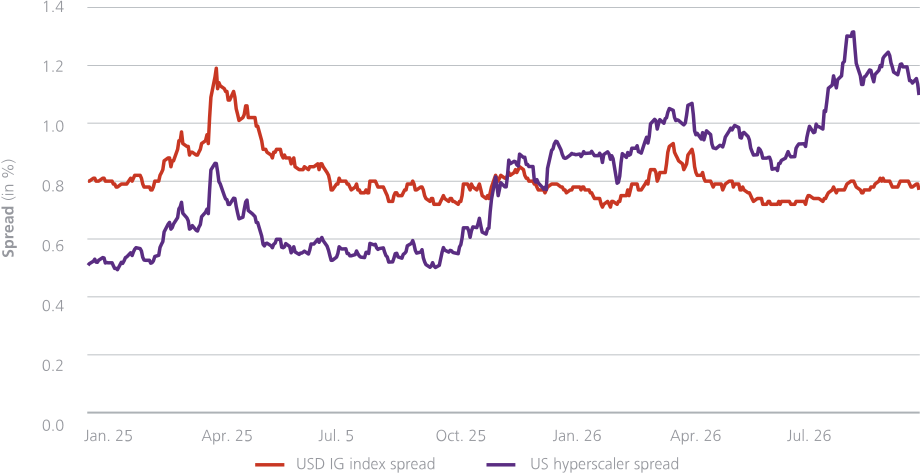
As Figure 6 shows, spreads on bonds issued by the hyperscaler universe1 have widened noticeably relative to the broader US investment-grade market during the third quarter. While part of the widening was subsequently retraced, the divergence from the broader US investment-grade market remained pronounced during the quarter. It suggests that investors are demanding a somewhat higher risk premium as the financing requirements associated with the AI investment cycle become more visible in corporate bond markets.
New issuance provides additional context. The companies in our hyperscaler universe have issued around USD 182 billion of USD-denominated bonds in 2026 to date, compared with approximately USD 93 billion during the whole of 2025. More than half of this year’s issuance had an initial maturity of at least ten years. In the third quarter alone, Amazon and Alphabet each placed USD 25 billion of new bonds. The increase in financing volumes therefore represents not only substantial new credit supply, but also a meaningful addition of longer-dated corporate duration.
The widening in spreads should not be interpreted as evidence of broad credit deterioration among these companies. It does, however, indicate that the rapid expansion of investment budgets is changing the way bond investors assess their financing needs and future cash flows. Together with the developments in real estate, the hyperscaler segment provides another example of how relatively contained movements in headline credit indices can coexist with increasingly pronounced differences between sectors and issuers.
Conclusion – resilience despite growing pressures
The third quarter has been characterised by an increasingly difficult combination of persistent inflation pressure and growing risks to economic activity. Energy markets have moved further from a pure price shock towards a problem of physical availability, while higher government bond yields have tightened financing conditions across the economy. The pressure is already visible in interest-rate-sensitive areas such as housing and European real estate.
Investment-grade credit markets have nevertheless remained broadly resilient. Aggregate spreads are still relatively stable, but developments in real estate, hyperscalers and systematic credit factors point to greater differentiation beneath the surface. Whether these pressures remain concentrated in individual sectors and issuers or broaden into the wider credit market will be one of the key questions for the final months of the year.
1 For this analysis, the hyperscaler universe comprises Alphabet, Amazon, Meta, Microsoft, Oracle and SpaceX, reflecting major US issuers with particularly high AI-related investment requirements.