Market commentary bonds: Corporate bonds as an anchor of stability in uncertain times
Geopolitical tensions, fiscal risks and diverging interest rate policies were shaping the bond market in the third quarter of 2025. While the US Federal Reserve is starting a cycle of interest rate cuts, European countries are coming under increasing pressure. Corporate bonds are proving to be an anchor of stability in a complex market environment, as Dr Harald Henke explains.

Dr. Harald Henke
Principal Investment Strategist Fixed Income
Key takeaways
-
Power conflicts and protectionism are weakening Europe’s competitiveness and strategic independence.
-
High spending and weak growth are weighing on Europe’s finances and driving up long-term interest rates.
-
Investment-grade securities are showing strength and becoming the preferred anchor of stability in an uncertain market environment.
The third quarter of 2025 was marked by geopolitical tensions, protectionist measures in the US and growing fiscal challenges in Europe – developments that also had a significant impact on the bond markets.
Growing fronts in global economic policy
The US government is increasingly ruthlessly pursuing its global interests. High tariffs and six-figure visa fees are intended to break India out of Eurasian integration. Secondary sanctions against countries that buy Russian oil and gas are intended to improve the sales prospects for American energy commodities. In addition, the US expects Europe and the Gulf states to make significant investments in the US economy.
Many of the countries affected are resisting these measures. India, for example, cancelled a major order from the US, concluded new economic projects with Russia, initiated a diplomatic thaw with China and took part in the latest Russian military exercises. The world is heading towards a division into two parts: One part uses the political, economic and financial resources and systems of the West, while the other part, led by China and Russia, is increasingly establishing alternative systems – from settlement mechanisms to clearing houses.
Europe’s strategic weakness and economic consequences
Europe is in danger of becoming the big loser in this development. Unable to formulate and represent its own interests, the EU follows the US even when this course runs counter to Europe’s own interests (energy policy) or hinders future growth potential (Middle East, China). The loss of affordable energy has led to the loss of 50,000 industrial jobs in Germany alone in 2024 – and the trend is rising (source: Statistisches Bundesamt).
The US is also proving to be an unreliable partner: While US President Trump is demanding massive spending by European NATO countries on US military equipment, the tariff negotiations between the EU Commission and the US government ended in a debacle for Europe. The US will receive duty-free access to the European market, while European companies will have to pay import duties of 15%. It is therefore hardly surprising that many European companies are now planning to increase their investments in the US.
Fiscal risks and rising long-term interest rates
Stagnating economic growth and massive fiscal spending, including a questionable militarisation strategy, are weighing on European public finances. The German military programme will make balanced budgets unlikely for years to come. Austria has been given a “negative outlook” by Moody’s. Spreads on French government bonds are rising again, and the British press is already drawing parallels with the IMF bailout in the 1970s.
The combination of weak growth potential, rising government spending and a lack of competitiveness amid high energy prices is leading to rising debt, persistent inflation and higher long-term interest rates.
Figure 1: Index of 30-year yields in selected countries
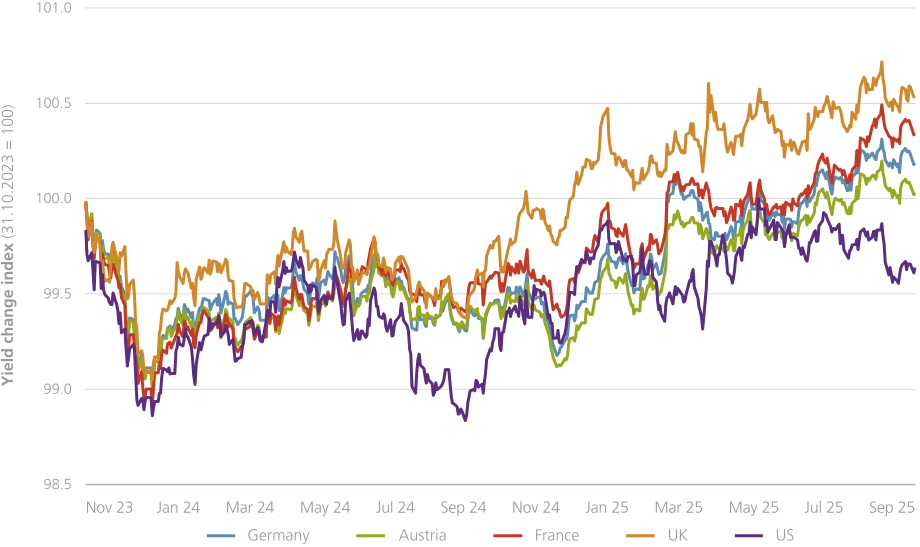
Since interest rates peaked just under two years ago, 30-year US yields have fallen by 36 basis points, while yields in selected European countries are higher and have risen as follows:
- Austria + 3 bps,
- Germany + 19 bps,
- France + 34 bps,
- United Kingdom + 53 bps
Europe must avoid the bond market becoming the starting point for a major crisis.
Interest rate policy: Fed begins easing cycle
Rates markets in the US and Europe showed little movement at the short end and in the middle range. While German yields rose slightly in the third quarter, US yields fell slightly.
Figure 2: Yields in the US and Europe
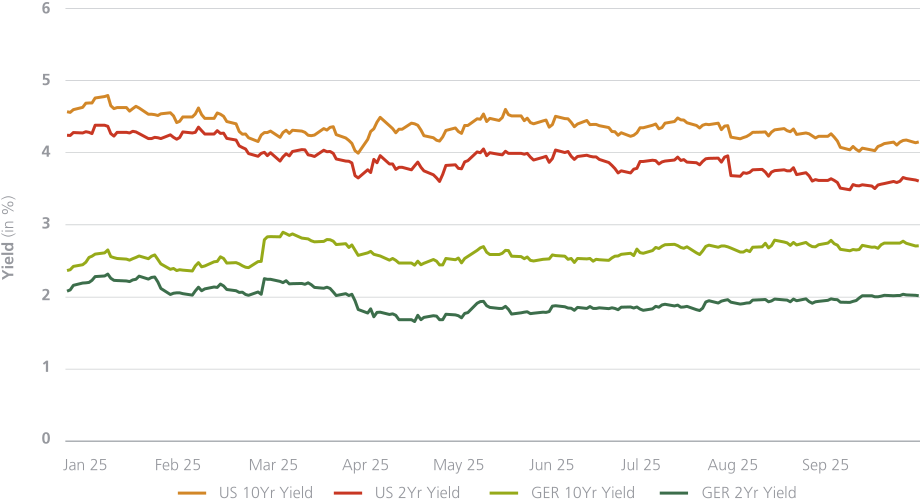
In September, the US Federal Reserve began its cycle of rate cuts with a 25 basis point reduction. At the same time, the projections published by Federal Reserve members (“dot plots”) indicated a slightly more aggressive course of cuts than previously.
Figure 3: Federal Reserve dot plots
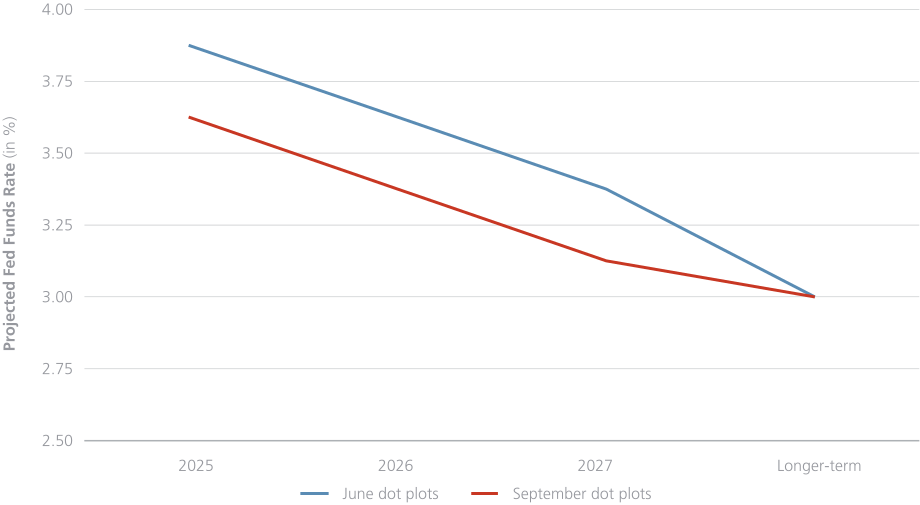
Fed members anticipate an additional rate cut in 2025 and the following two years – expectations remain for a downward trend in rates.
US economy: Signs of a slowdown
One reason for this is that many economic indicators in the US are now pointing downwards, as the following figure illustrates:
Figure 4: Selected economic indicators for the US

The purchasing managers’ index for the manufacturing sector has been consistently below the expansion threshold of 50 since the beginning of the year, and consumer confidence has fallen by more than 10 points since then. The economic slowdown is particularly evident in the US labour market: Employment change has been fluctuating around zero for several months – a level that is usually associated with recessions.
Even though some stronger economic figures have been reported recently, the trend in the US is pointing towards an economic downturn. However, this development is hardly reflected in risk assets.
Credit spreads: Corporate bonds defy the environment
Credit spreads in euro and USD remained robust in the third quarter of 2025.
Figure 5: Credit spreads in euros and USD

USD spreads fell by 9 basis points and euro spreads by as much as 13 basis points, despite weak economic data. Corporate bonds appear to be developing into a safe haven for investors in a world where government bonds seem risky. Large European corporations in particular, which are globally networked with partners and production facilities, are likely to be better positioned than many countries to cope with the toxic mix of protectionism, fiscal profligacy and low growth. The strength of corporate bonds is therefore hardly surprising.
Conclusion: Stability through quality
The cycle of interest rate cuts has also begun in the US. Interest rates are likely to continue falling as the US economy has slowed. While European countries are under fiscal pressure, European companies have been much more successful in navigating the current political environment. The trend towards investment-grade corporate bonds becoming the new safe haven is slowly gaining momentum.